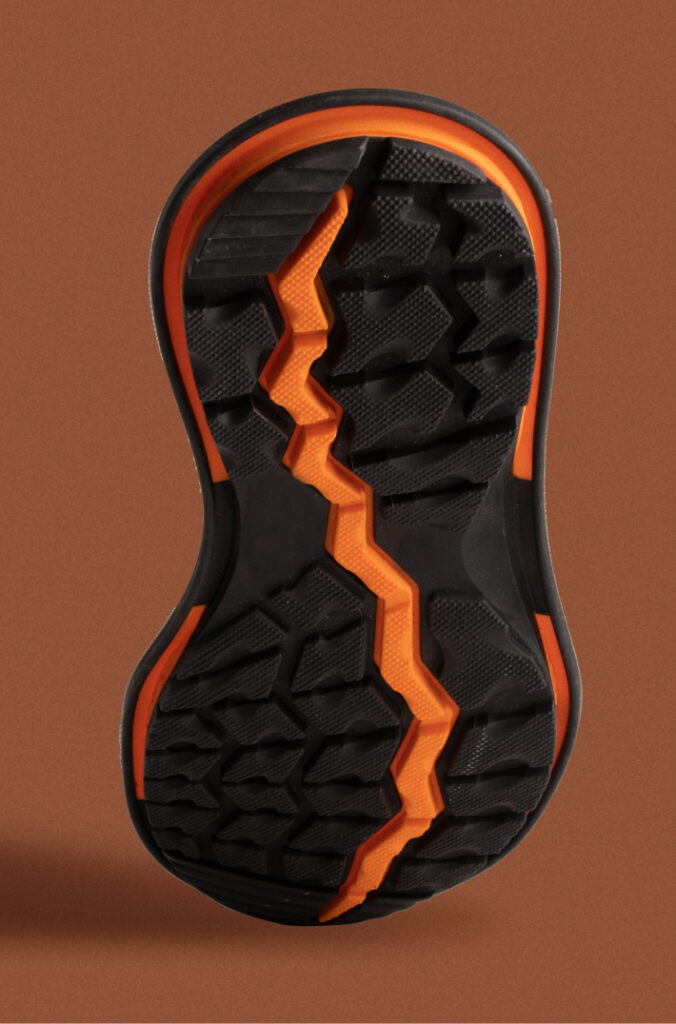
As sustainability continues to reshape the footwear industry, material innovation is becoming one of the most important drivers of meaningful change. Brands are increasingly challenged to reduce environmental impact without compromising the technical standards required by modern footwear applications. In this context, recycled thermoplastic compounds are emerging as a concrete and scalable solution.
Re-Life materials represent an important step in this direction. Developed to incorporate recycled thermoplastic content within high-performance compounds, they support a more circular approach to production by extending the value of existing resources and reducing dependence on virgin raw materials. For manufacturers and brands alike, this means moving closer to sustainability goals while maintaining the functional characteristics required for industrial applications.
What Re-Life Materials Represent
Re-Life materials are innovative compounds designed to integrate recycled thermoplastic content into new production cycles. Their value lies not only in the use of recycled inputs, but in the ability to preserve the performance profile expected from technical materials used in footwear manufacturing.
This is a critical point. In industrial contexts, sustainability cannot come at the expense of reliability, consistency, or processability. Materials must still meet the demands of design, manufacturability, and end-use performance. Re-Life materials address this challenge by offering characteristics comparable to those of virgin compounds, enabling a more responsible material strategy without compromising quality.
Why Thermoplastics Are Especially Relevant
Thermoplastic materials are particularly well suited to circular production models because of their ability to be reprocessed and reintegrated into new applications. This makes them especially suitable for the development of recycled-content compounds that remain technically viable within industrial production systems.
In footwear injection molding, this property is highly relevant. Thermoplastics offer the combination of versatility, process control, and repeatability needed to support both product development and large-scale manufacturing. Their compatibility with recycled-content strategies makes them a valuable resource for companies seeking to build more sustainable production models while preserving industrial efficiency.
Performance and Sustainability Can Coexist
One of the most common misconceptions in sustainable manufacturing is that recycled materials necessarily involve a compromise in technical quality. In reality, the evolution of compound engineering is demonstrating that recycled-content materials can be developed to deliver performance levels aligned with demanding industrial requirements. Re-Life materials reflect this progress. By balancing sustainability objectives with mechanical and processing performance, they offer a practical pathway for brands looking to introduce more responsible material solutions into their collections. This is especially important in a market where sustainability claims must increasingly be supported by real technical and supply-chain credibility.
Supporting Traceability and Certification
Another key advantage of recycled-content material solutions is their potential to support traceability and recognized certification pathways. In particular, products developed with these materials may be eligible for GRS certification, offering an additional layer of transparency and accountability within the supply chain.
For brands, this is not only a matter of compliance or communication. Certification can play a strategic role in demonstrating alignment with sustainability targets, meeting stakeholder expectations, and strengthening trust in the product development process.
CO.BO.’s Approach to Material Innovation
At CO.BO., material research has always been closely linked to performance, processability, and long-term industrial value. The development and application of solutions such as Re-Life materials reflect this approach: identifying compounds that can contribute to a more circular production model while continuing to meet the technical requirements of footwear manufacturing.
For brands navigating the growing complexity of sustainable product development, working with a partner capable of combining technical expertise, material knowledge, and industrial reliability is increasingly important. Because the future of footwear will not depend only on new ideas, but on the ability to turn them into viable, high-performance production solutions.