Football footwear is one of the most technically demanding areas of injection moulding, requiring soles and structural components to balance traction, flexibility, impact resistance, dimensional stability, and reduced weight.
For Co.Bo., football is also more than an application category. It is one of the sectors in which the company’s technical identity first emerged, creating the foundation for decades of material research, mould development, and high-performance footwear manufacturing.
What began with the production of plastic counters and lace components soon developed into a much broader ambition: applying the methods and combinations traditionally associated with technical injection moulding to the specific requirements of sports footwear.
Why Football Footwear Requires a Technical Approach
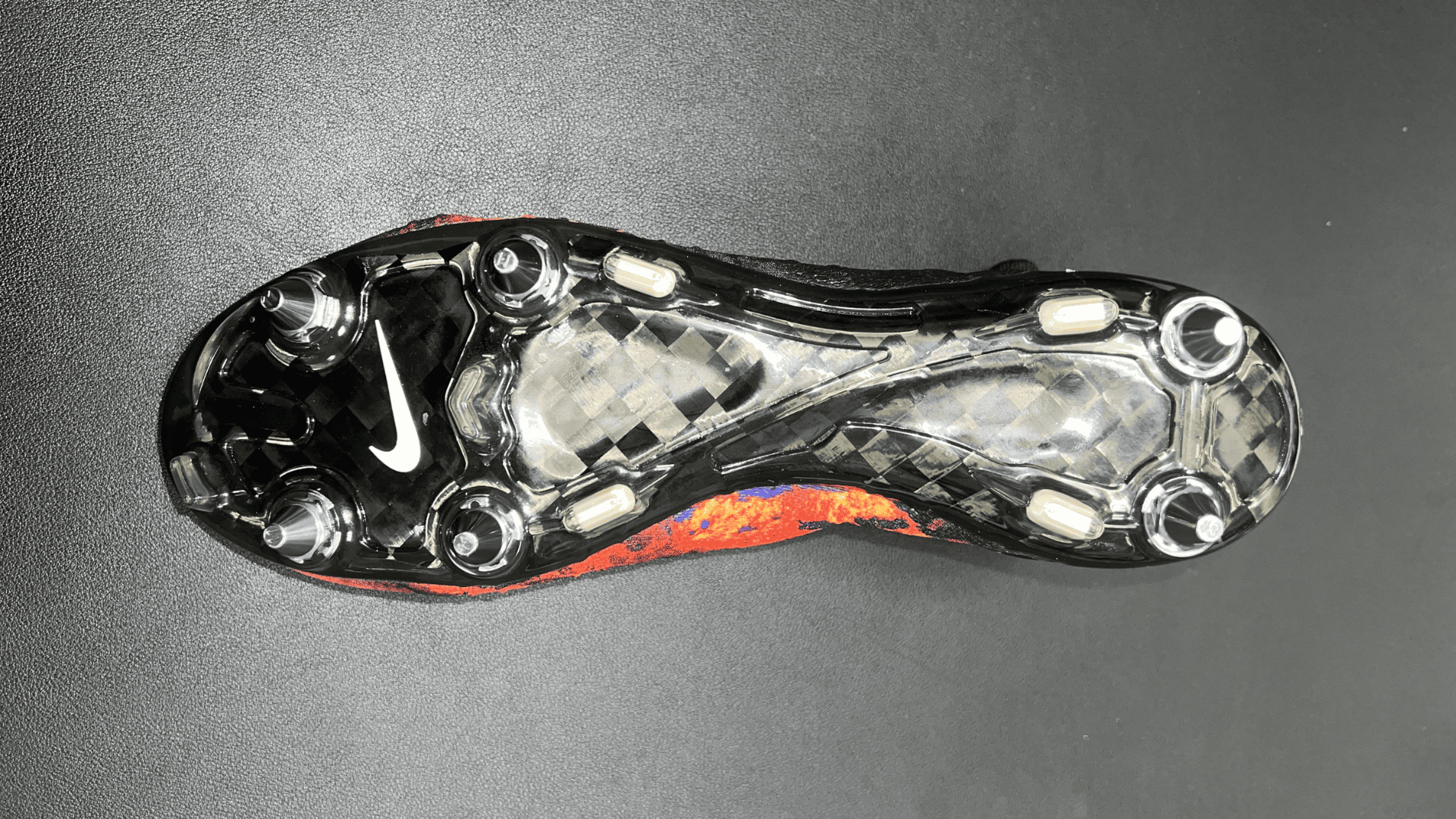
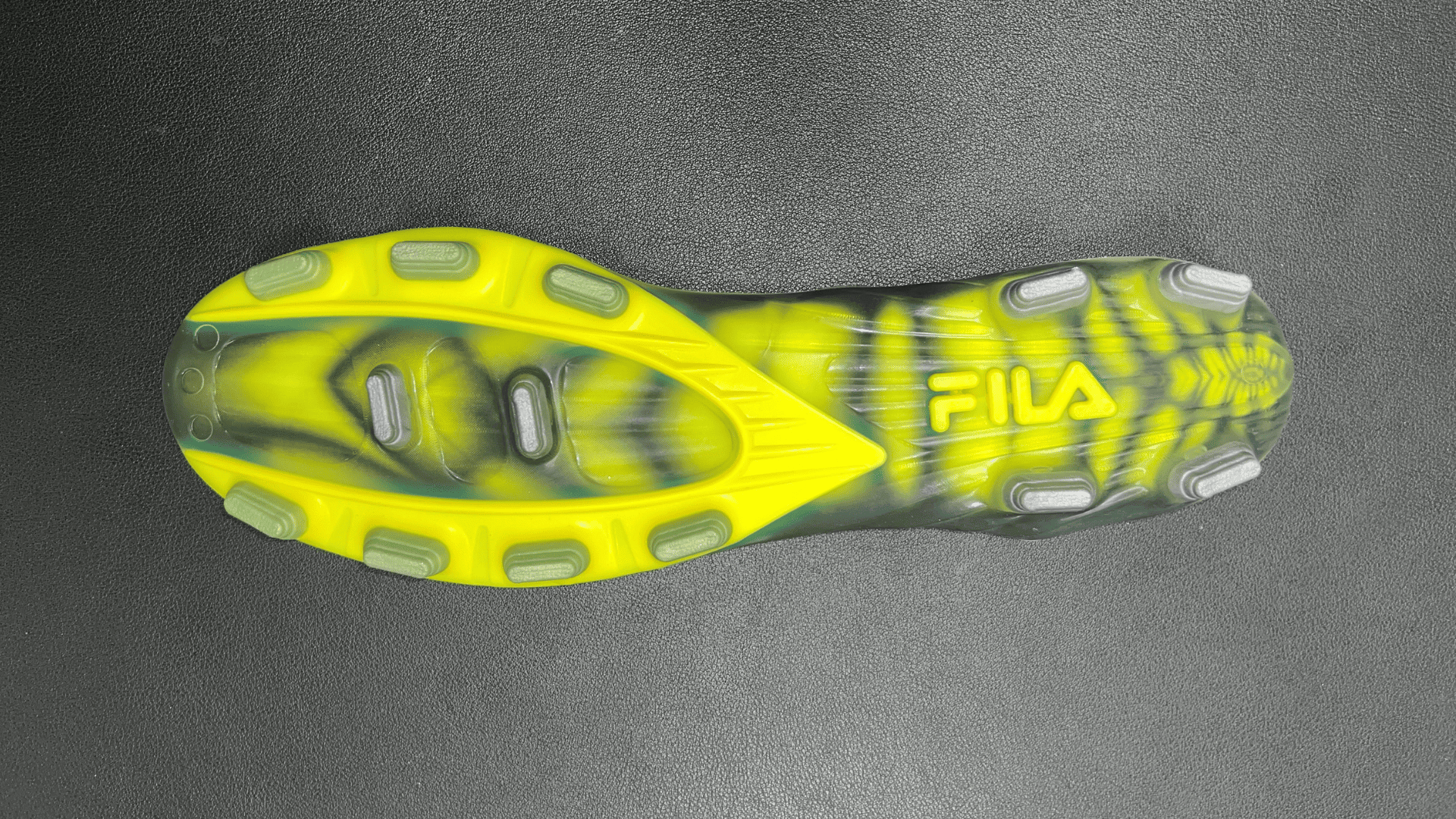
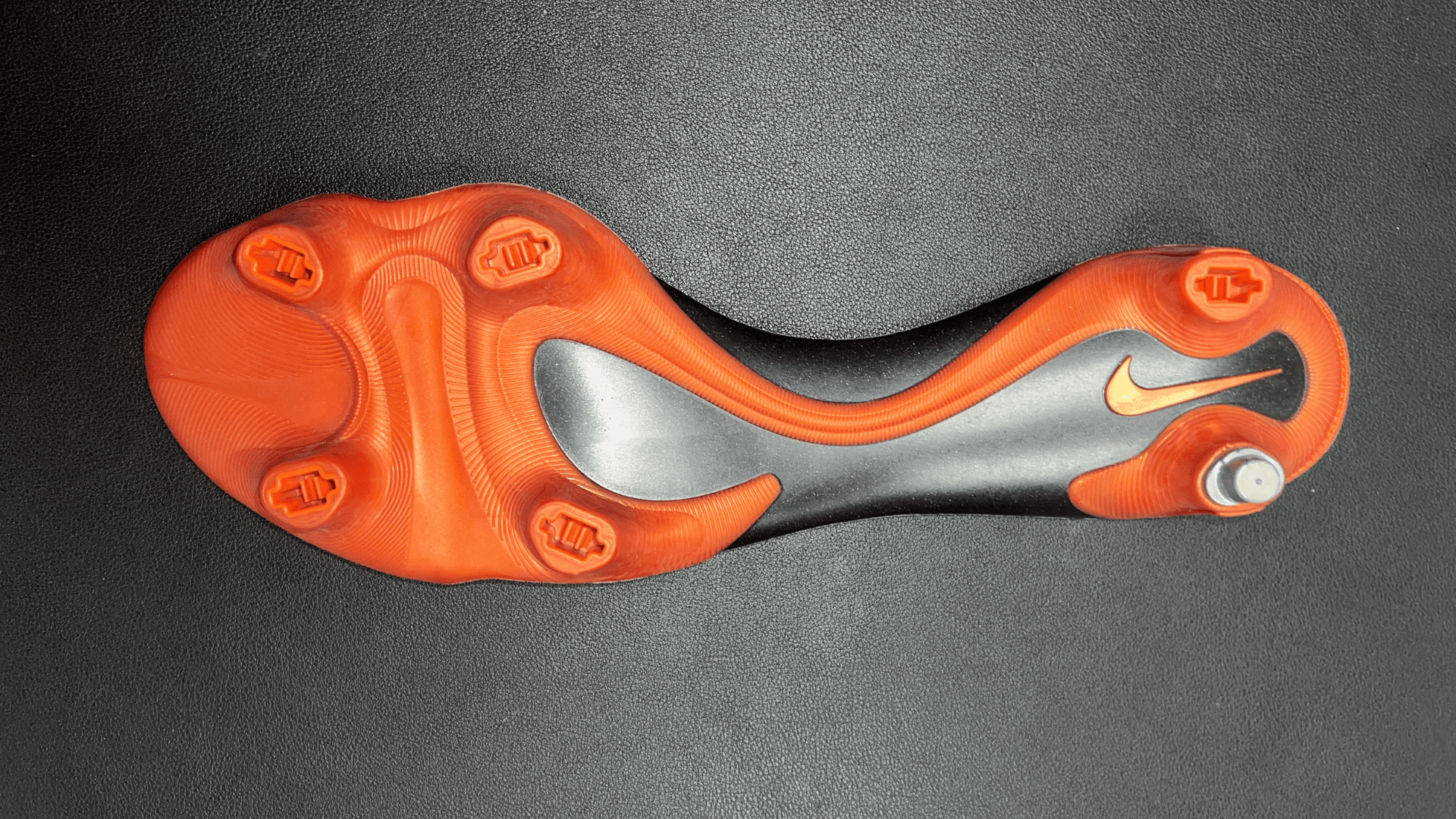
A football sole must respond to several demands simultaneously. It must provide stability and traction while supporting rapid changes of direction, acceleration, impact, and repeated flexion. The distribution and geometry of the studs, the stiffness of the plate, the behaviour of the material, and the connection between the sole and the upper all influence the performance of the finished boot.
These requirements make football footwear a particularly complex field for product development. A visually effective design is not enough: geometry, compound selection, mould construction, and injection parameters must work together as a single system.
Even small variations in rigidity, thickness, material flow, or dimensional behaviour can affect fit, stability, stud performance, and the overall response of the product. For this reason, the development of football components requires a manufacturing partner capable of combining design interpretation with technical and industrial expertise.
The Beginning of Co.Bo.’s Football Journey
Co.Bo. was founded in 1984 by Leonardo Procaccini and Rosanna Borroni, initially focusing on plastic counters and other footwear components. From the beginning, the company looked towards important clients in the football sector, seeing an opportunity to introduce alternative solutions based on technical moulding expertise.
This approach was significant because it treated the football sole not simply as a component to be reproduced, but as a technical product to be engineered. Materials, structures, and production solutions could be adapted to achieve specific functional outcomes.
Football therefore became an early testing ground for the method that would later define Co.Bo.’s work across multiple footwear categories: understanding the application, identifying its performance requirements, and developing the most appropriate combination of material, mould, and process.
The First International Breakthrough
One of the first major milestones came through the relationship with Puma, which was then a leading name in football footwear.
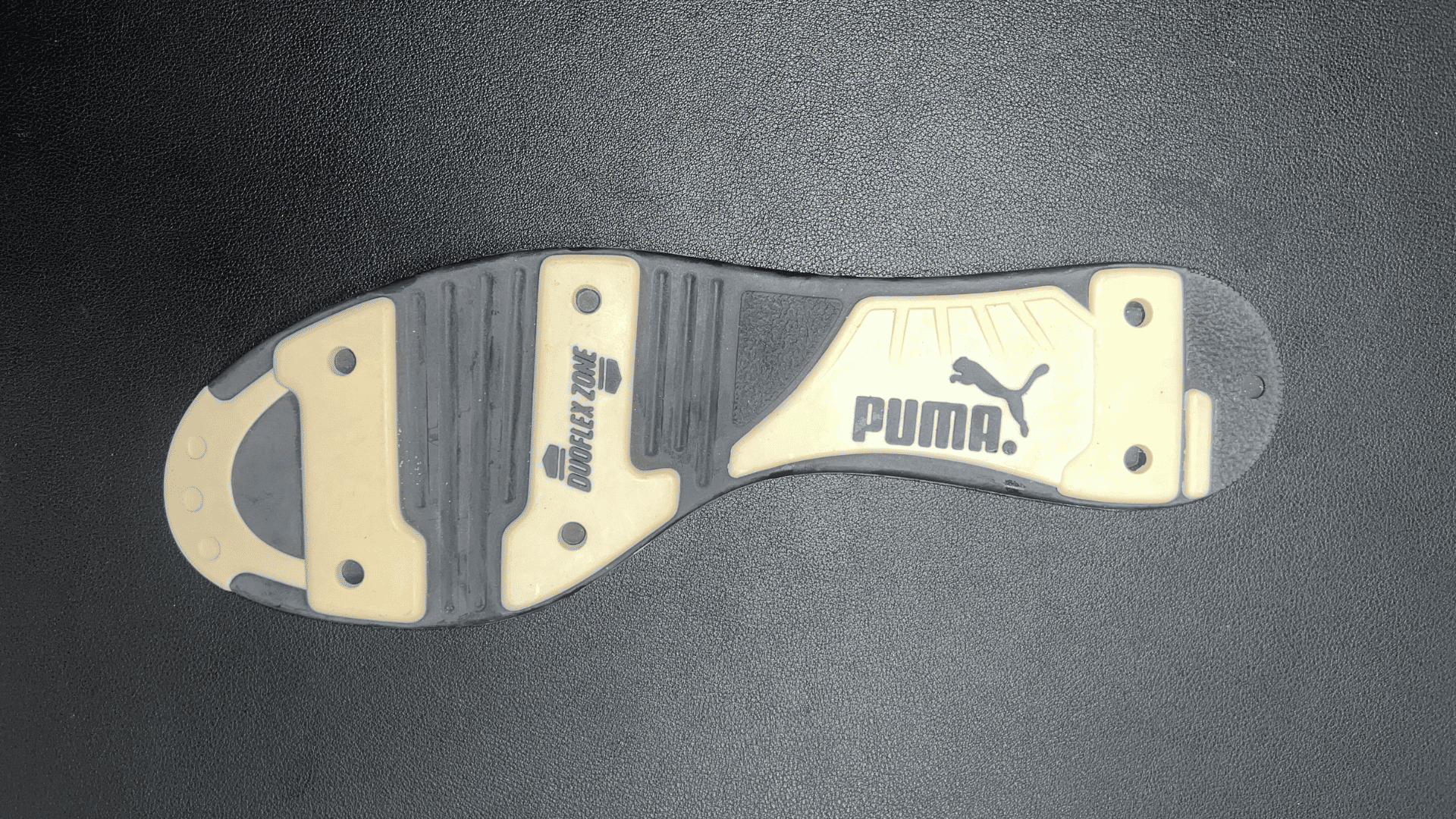
Leonardo Procaccini travelled to Herzogenaurach, the historic headquarters of the German sports company, and gained its confidence with the Duo Flex Zone football outsole project. That sole was subsequently used in the boots worn by Diego Armando Maradona during the 1986 World Cup final. The collaboration marked the beginning of a long relationship between Co.Bo. and Puma, with Co.Bo.-manufactured components continuing to be used in the brand’s footwear over the following years.
Beyond the historical relevance of the product, this project demonstrated something fundamental: a specialist manufacturer from Le Marche region could contribute directly to the development of footwear designed for the highest level of international competition.
From Specialist Production to Industrial Scale
The experience developed with Puma opened the way to further collaborations and helped strengthen Co.Bo.’s position in football footwear manufacturing.
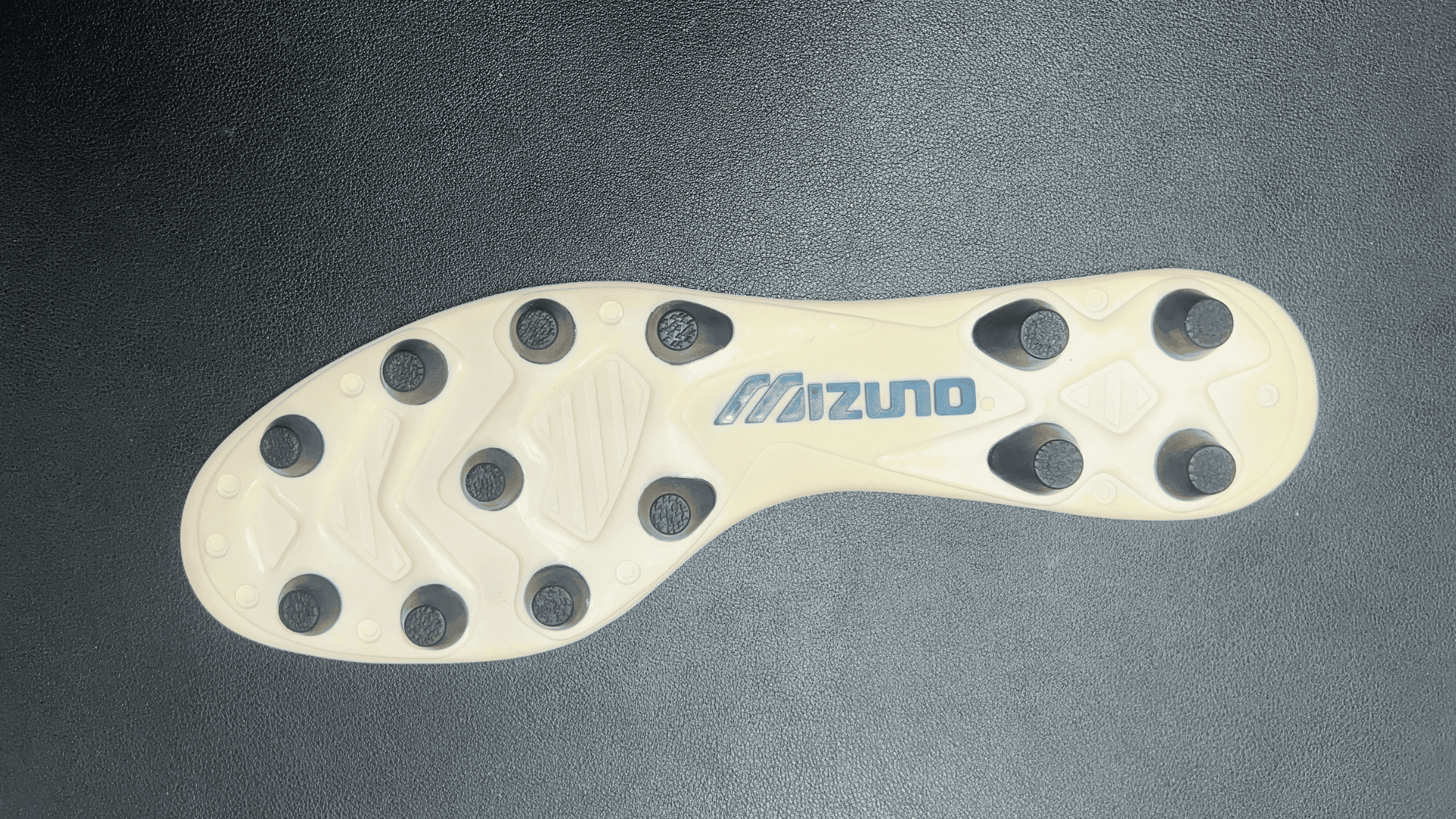
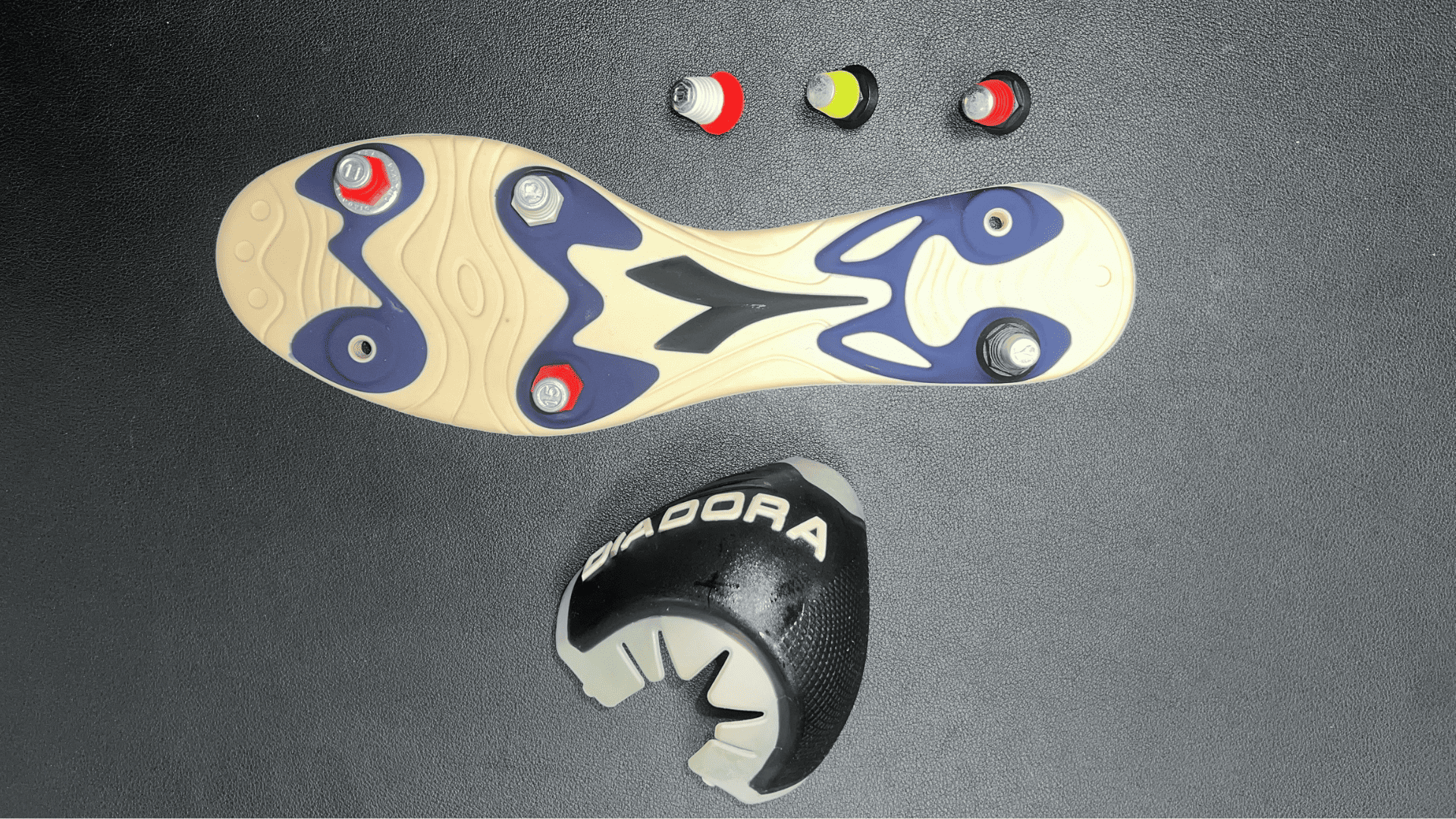
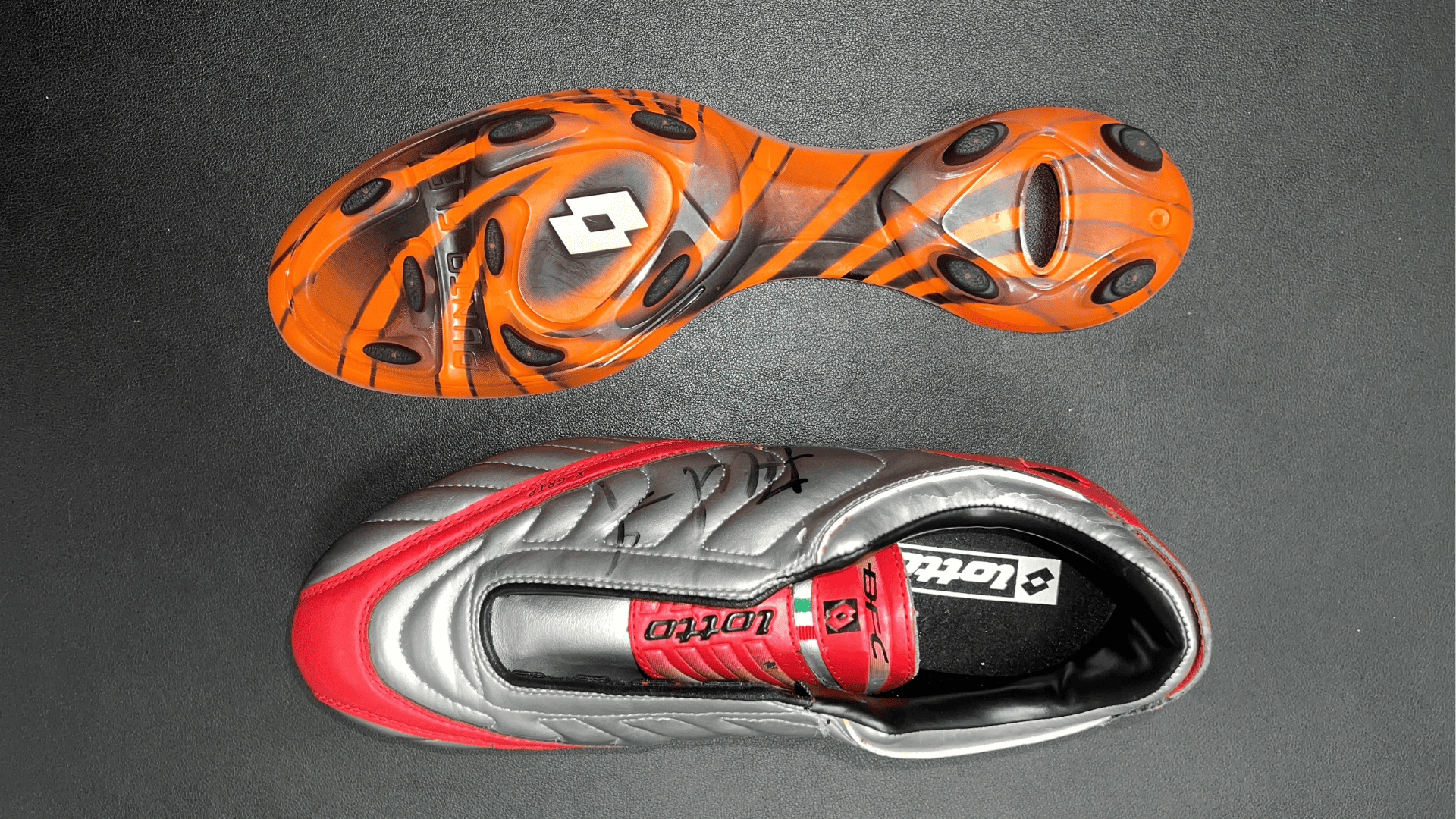
In 1992, Nike entered the football footwear sector with products made possible in part through the supply of Co.Bo. soles. Other collaborations followed with brands including Umbro, Mizuno, Reebok, ASICS, Diadora, Lotto, Valsport, Pantofola d’Oro, Kronos, Kelme, and others.
Production volumes grew rapidly. From approximately 30,000 pairs in 1995, output increased to 150,000 the following year and continued expanding until reaching three million pairs in 1999.
This evolution required more than additional capacity. Producing technical components at scale meant ensuring consistency across moulds, materials, production cycles, and finished parts. The knowledge gained during these years strengthened Co.Bo.’s understanding of repeatability, dimensional control, quality testing, and industrial process optimisation.
How Football Shaped Co.Bo.’s Technical Expertise
Football footwear helped establish many of the capabilities that would later become central to Co.Bo.’s broader work.
Developing soles and components for this category required the company to work continuously on:
- complex and performance-oriented geometries;
- different balances of rigidity and controlled flex;
- material resistance under repeated mechanical stress;
- accurate mould engineering;
- dimensional stability and production repeatability;
- components designed around specific athletic and functional requirements.
The sector also reinforced the importance of collaboration. Translating the intentions of a footwear brand into a scalable product requires constant dialogue among designers, developers, mould engineers, material specialists, and production teams.
As football footwear became increasingly design-driven, the expectations of leading international brands pushed technical development further. More distinctive geometries, complex surface effects, refined details, and increasingly recognisable visual identities required continuous research into new materials, mould textures and finishes, and advanced injection-moulding techniques.
This collaborative technical approach remains essential today, as football footwear continues to evolve through lighter constructions, increasingly complex stud configurations, new compounds, more ambitious design requirements, and highly specialised performance targets.
A Foundation for Continuous Development
Football remains an important chapter in Co.Bo.’s history because it demonstrates how specialised experience can shape long-term industrial capability.
The sector taught the company to work where small details have measurable consequences, where materials must perform under dynamic conditions, and where product development depends on the ability to connect creative intent with production reality.
Today, the experience acquired through football continues to inform Co.Bo.’s approach to technical injection moulding for footwear. It supports the development of custom solutions, the evaluation of new compounds, the engineering of complex moulds, and the creation of products designed around the specific needs of each brand.
Because in football footwear, performance begins long before the product reaches the pitch. It begins with the decisions made during design, material selection, tooling, testing, and production—and with the expertise of the partner responsible for bringing them together.