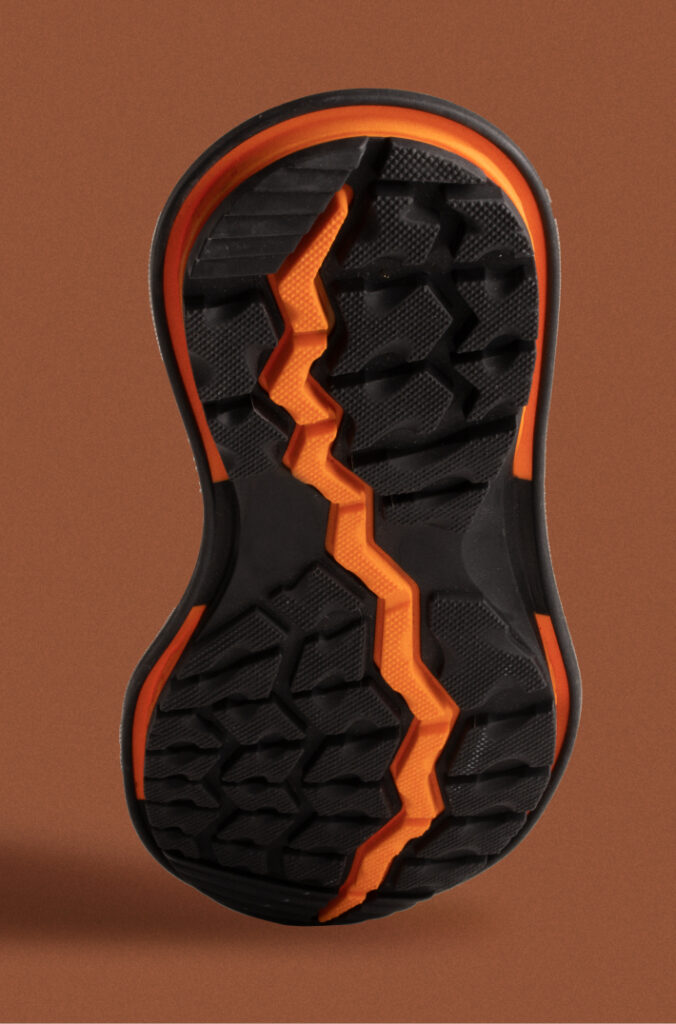
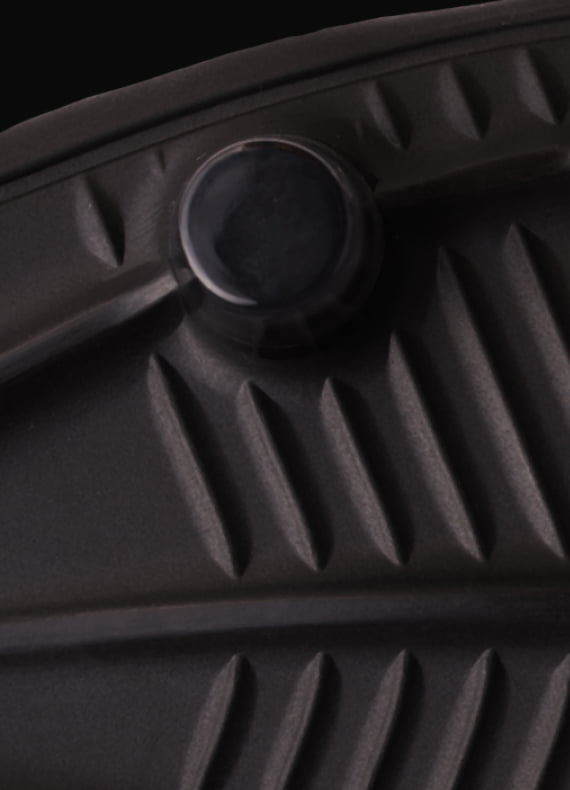
A footwear construction does not always need to be built from multiple separate layers and components.
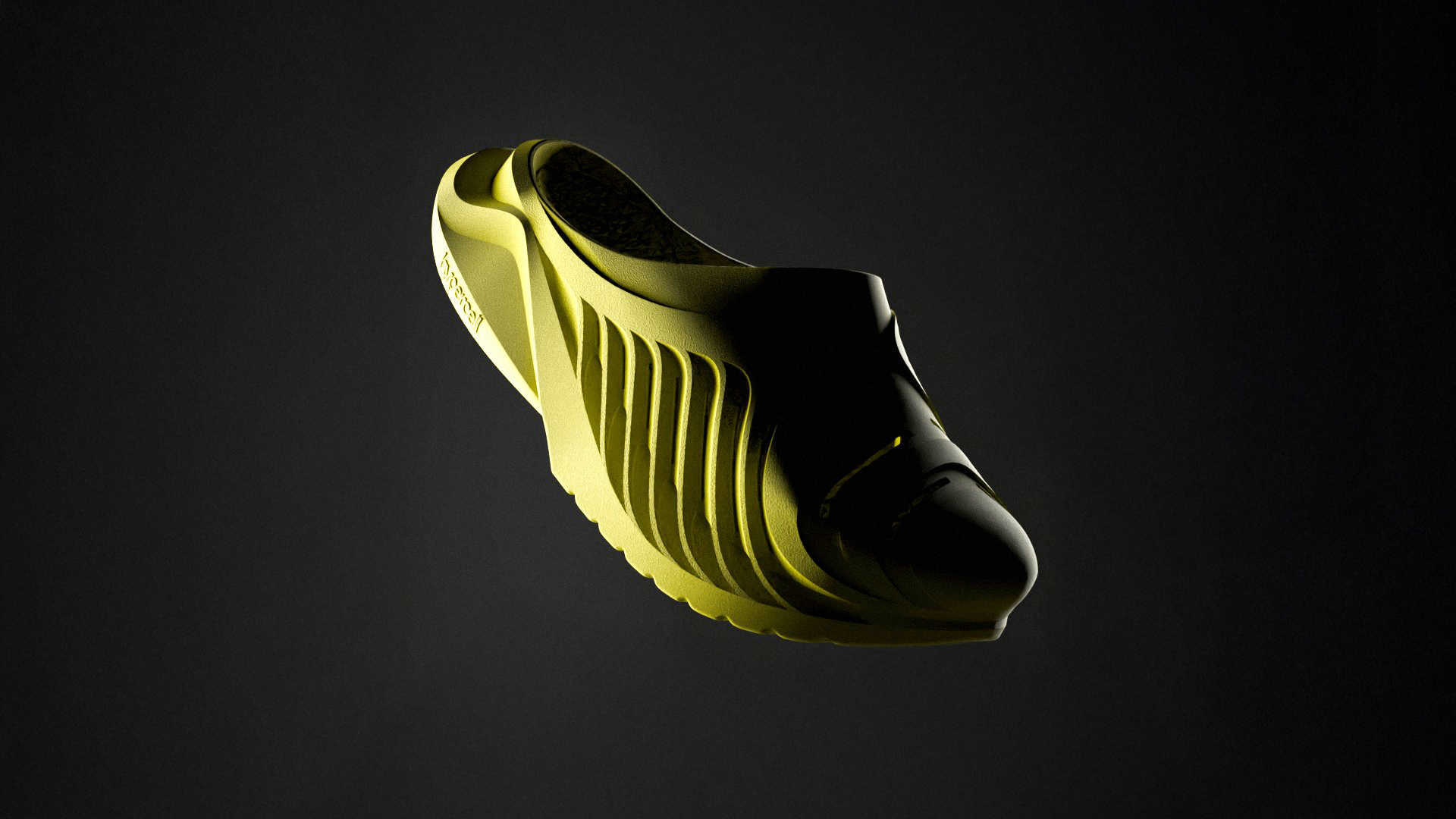
Hypercell Single-Mold explores a different approach: using Co.Bo.’s lightweight foam technology to create a seamless, one-piece moulded construction in which product form, comfort, and structural function are developed together.
The result is not simply another application of a lightweight material. Single-Mold changes the way the product itself can be conceived, opening new possibilities for streamlined footwear constructions while reducing assembly time and maintaining the comfort and durability expected from Hypercell.
What Is Hypercell Single-Mold?
Single-Mold is one of the four application areas developed around Hypercell, alongside Midsole, Insert, and Filler.
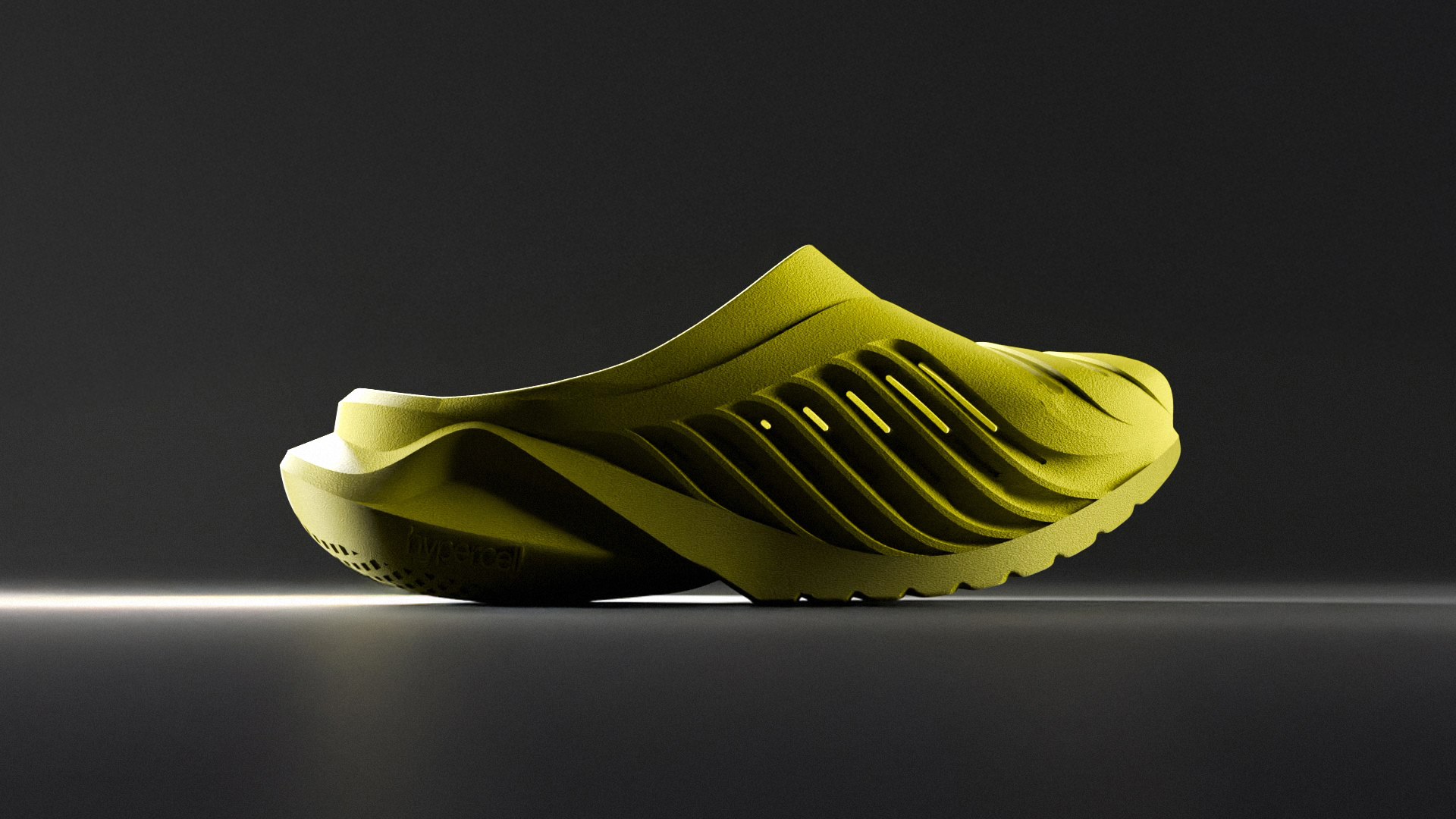
Rather than using Hypercell as one component within a multi-part sole construction, the Single-Mold application uses the technology to create a seamless one-piece product.
This makes the construction itself part of the technological proposition. Material, geometry, surface, and functional areas can be considered as elements of the same moulded object rather than as independent components that must subsequently be assembled.
Why Does One-Piece Construction Matter?
Traditional footwear constructions may require several components to be produced individually and subsequently brought together during assembly.
Single-Mold offers another route. By consolidating more of the construction into one moulded element, the production sequence can be simplified and assembly time reduced.
For brands and footwear developers, this creates an interesting relationship between product design and manufacturing efficiency: the way the product is designed can also influence how efficiently it can be produced.
The one-piece approach is therefore not only an aesthetic choice. It becomes part of the industrial design strategy of the product.
How Does Single-Mold Change the Design Approach?
When several functions are brought into a single moulded construction, geometry becomes especially important.
Different volumes, thicknesses, surface structures, flex areas, support zones, and visual details can become part of the same continuous form.
Hypercell is particularly relevant in this context because the technology has been developed not only around lightweight performance, but also around dimensional stability and surface definition. These characteristics allow designers to explore more articulated geometries while maintaining a controlled and consistent finished product.
In a Single-Mold application, this means that technical and visual elements do not necessarily need to be treated separately. Structure can become expression; surface can become function; and the mould itself becomes a central design tool.
Where Can Hypercell Single-Mold Be Applied?
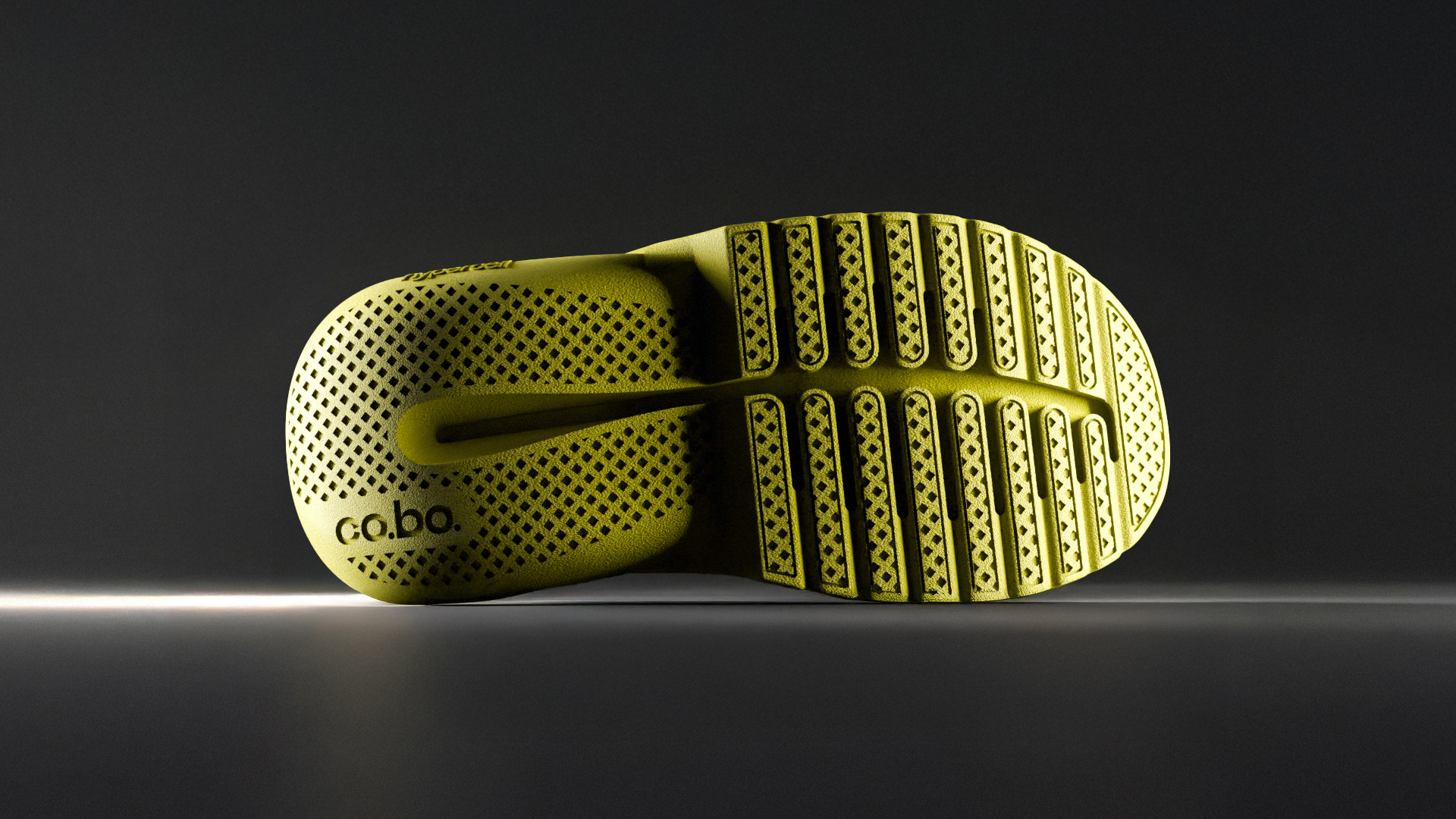
The Single-Mold concept is particularly relevant where lightweight comfort, simple construction, and a strong product identity need to coexist.
Current Hypercell development identifies applications including:
- post-activity and recovery footwear;
- slip-ons;
- casual footwear;
- lifestyle sneakers and related lightweight constructions.
These categories should not be understood as fixed limits. Single-Mold is an application platform, and its suitability depends on the construction, geometry, required performance, and intended use of each project.
The opportunity for brands is therefore to explore where a conventional multi-component construction could potentially be reconsidered as a more integrated moulded product.
What Are the Main Advantages of Hypercell Single-Mold?
The value of Single-Mold comes from the combination of several characteristics rather than from one isolated performance figure.
The application brings together Hypercell’s lightweight and comfort-oriented properties with a one-piece construction that can improve durability and reduce assembly time.
At the same time, the moulded approach creates opportunities for clean surfaces, distinctive geometries, integrated functional areas, and a visually coherent product.
For footwear developers, this creates a different set of possibilities: fewer boundaries between material, component, and finished form, and greater opportunity to develop the construction as one connected system.
From Hypercell Technology to a Complete Footwear Application
Hypercell was developed by Co.Bo. as a lightweight foam technology for footwear, combining material development with the company’s experience in injection moulding, mould engineering, testing, and industrial production.
Single-Mold shows how that research can move beyond an individual component.
Instead of asking only how Hypercell can replace or improve a conventional midsole, insert, or filler, the Single-Mold application asks a broader question: what happens when the technology becomes the basis for the construction itself?
For brands and development teams, this opens a collaborative process in which material, geometry, tooling, aesthetics, and manufacturing can be developed together around a specific product concept.
Is Single-Mold Right for Every Footwear Project?
Not necessarily.
Single-Mold should be considered as one of several possible Hypercell applications rather than as a universal replacement for conventional footwear constructions.
The correct approach depends on the product brief, intended use, required performance, geometry, and manufacturing strategy.
For some projects, Hypercell may be more appropriate as a Midsole, Insert, or Filler. For others, integrating the technology into a Single-Mold construction may open opportunities that would be difficult to achieve through a conventional multi-component architecture.
The objective is therefore not to force a product into a predefined solution, but to identify the Hypercell application that best supports its design and performance requirements.
FAQ
What is Hypercell Single-Mold?
Hypercell Single-Mold is an application of Co.Bo.’s Hypercell technology designed around a seamless, one-piece moulded footwear construction.
Is Single-Mold a different material from Hypercell?
No. Single-Mold describes an application and construction approach. Hypercell is the underlying lightweight foam technology.
What are the main advantages of a Single-Mold construction?
The application is designed to combine lightweight comfort and durability with a simplified one-piece construction that can reduce assembly time and create greater integration between product geometry and manufacturing.
Which types of footwear can use Hypercell Single-Mold?
Current development includes recovery footwear, slip-ons, casual products, and lifestyle footwear. The suitability of the technology should nevertheless be evaluated according to each specific project.
Does Single-Mold eliminate every assembly operation?
Not necessarily. It creates a one-piece moulded construction and can reduce assembly requirements, but the complete footwear product may still include additional components or manufacturing operations depending on its design.
Can the Single-Mold geometry be customised?
Yes. The concept is intended to be developed around the requirements of the individual footwear project, with geometry, tooling, and product construction considered together during development.